A Brick Wall in the Family Tree
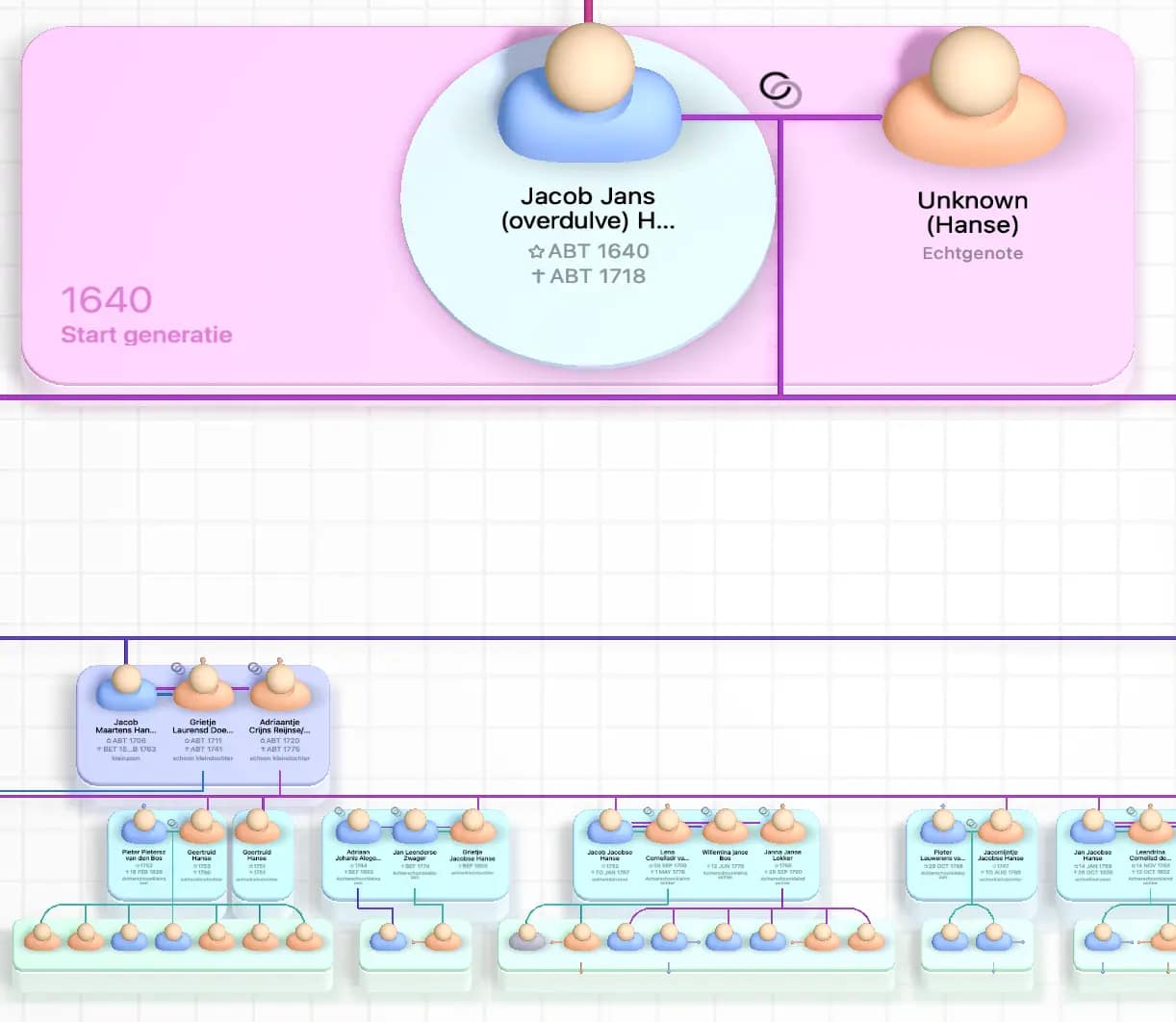
Sometimes there’s that one ancestor you long to know more about, but who seems to have vanished from the records. For me, it was the wife of Jacob Jans Hanse (c. 1640), my earliest known ancestor in the Hanse line. Some online trees listed her as Engeltje Jans, based on a marriage record found in Amsterdam. But there was no real evidence she had ever come to Zeeland. No baptisms, no children bearing that name, nothing that truly fit the story.
This is what genealogists call a brick wall: a point where the trail ends.
Searching the Archives
So what do you do then? I tried looking at how the grandchildren were named. Sometimes the second daughter is named after the maternal grandmother. But that only helps if there was no second marriage, or no other family members with similar names. I also looked for baptism witnesses, a living grandmother present at a baptism can sometimes offer a valuable clue.
But around 1650–1700, the baptismal records here on Schouwen-Duiveland are incomplete. Much of the information hasn’t been digitized or indexed. In that case, you hope to stumble upon a will or an estate inventory that mentions names.
Eventually, I decided to try something time-consuming: browsing through notarial records. No clear direction, just blind hope. Page by page, year after year, notary after notary.
And then, finally . I found something.
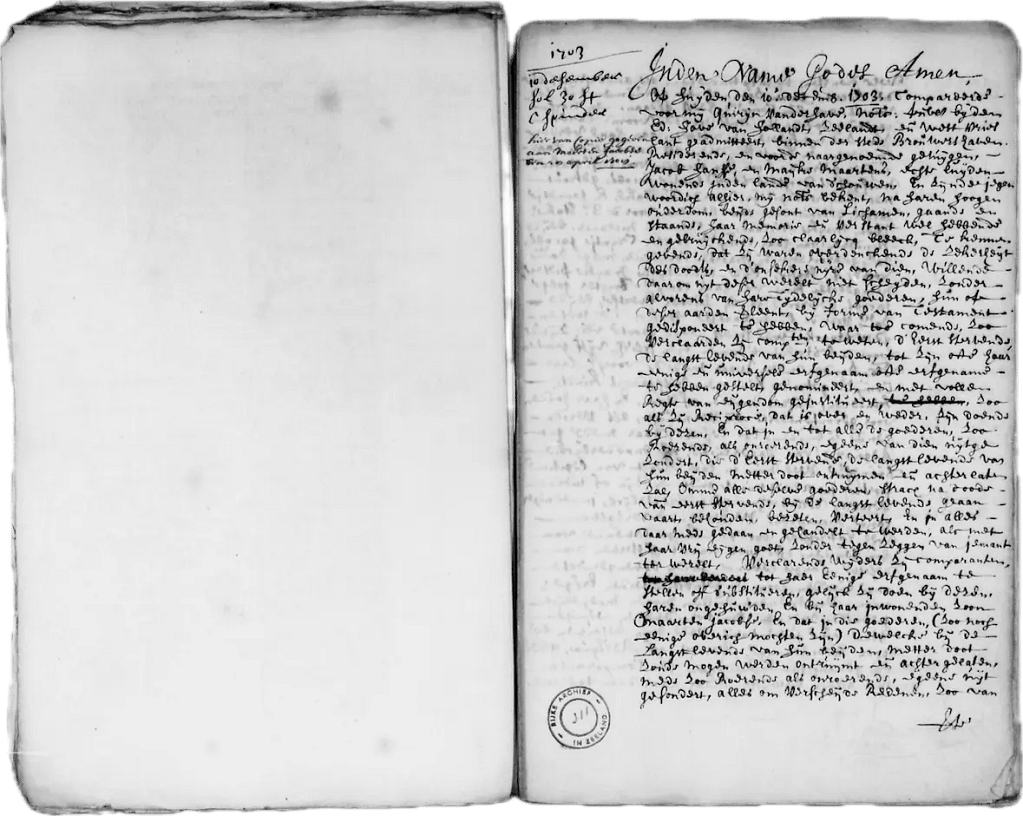
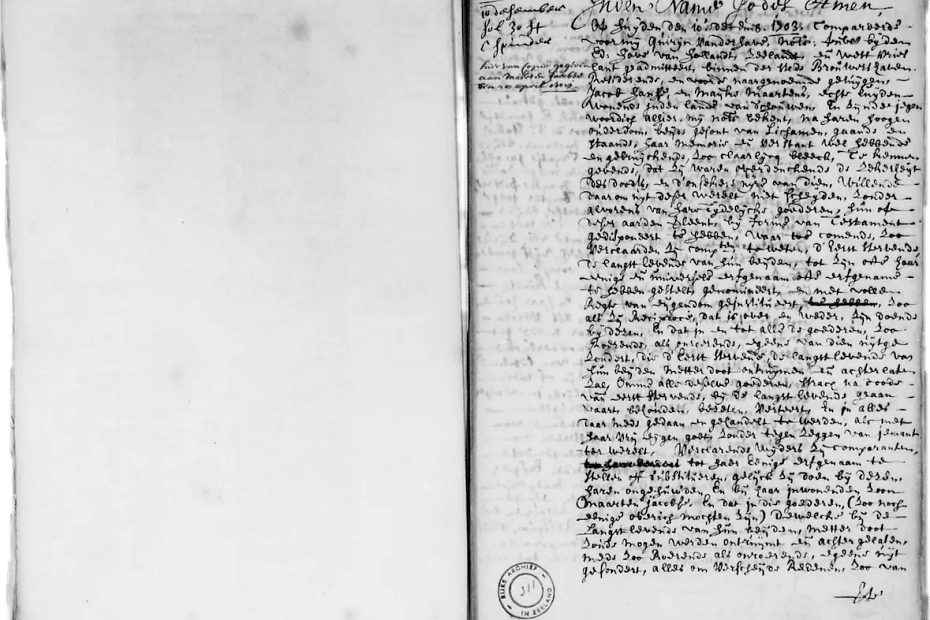
Source: Zeeuw Achief, 10 Rechterlijke, Weeskamer en Notariële Archieven Zeeuwse Eilanden (RAZE), 1456-1811 (1852) Inventaris 2.3.2.3.1. Archief van de notaris Quirijn van der Haven, 1679-1707,5025-4431, 10-12-1703, scan 142 ( Zeeuws Achief )
A will. The last will and testament of Jacob Jans Hanse and Maijke Maartens.
Reliable Evidence
There it was. Her name. Not Engeltje. Not someone from Amsterdam. But a woman from Zeeland. At last, I knew who she really was.
After years of searching, I had found her. The brick wall had fallen.
The will revealed valuable genealogical information. New family connections came to light that had previously remained unknown. The names of the couple’s two sons matched with reliable earlier sources. One name stood out in particular: the second son, Maarten. It suggested he was named after his maternal grandfather, something that’s supported by his mother’s patronymic, Maartens, indicating her father’s name was very likely Maarten.
Later, I also found a record from the local court (a “schepenacte”) showing that Maijke Maartens and her son Maarten owed a debt to the local lord. This document helped confirm the genealogical link and made the evidence more reliable.
Another striking detail in the will was that son Maarten was to inherit everything after the death of the surviving parent. This was granted to him as a sign of gratitude for the care he had given his parents. He was, however, required to pay ten Flemish pounds, to be divided among the other heirs.
Are you also stuck in your research, or would you like help uncovering or preserving your own family story? I’d be happy to assist you, whether it’s with genealogical support, archive research, or turning your history into a tangible family book.